Neuroengineering and Computational Neuroscience
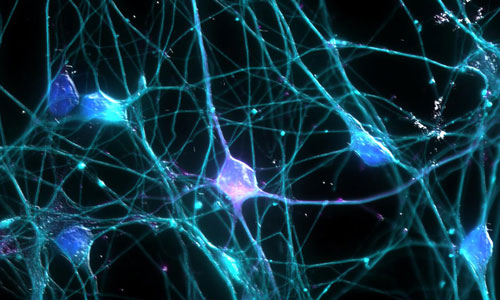
Neuroengineering and computational neuroscience attract a large community of investigators, including many in the Emory/Georgia Tech Biomedical Engineering department and the Department of Biology at Emory College. The research employs mathematical, computational, and engineering approaches to understand the nervous system better or improve its function. Computer-modeling studies range from simulation of ion channel kinetics to biologically realistic single-neuron models in basal ganglia, cerebellum, and spinal cord; to quantitatively measuring behavior. Additional experimental approaches include the creation of hybrid systems that interface neurons with computer-simulated or microengineered components, often in closed-loop stimulation. Researchers are also refining noninvasive biomedical imaging techniques in primates and rodents, including techniques in magnetic resonance imaging (MRI) and radiotracer development in positron emission tomography (PET) and single photon emission computed tomography (SPECT).
Faculty with interests in Neuroengineering and Computational Neuroscience:
- Gordon Berman
- Alan Emanuel
- Candace Fleischer
- Ming-fai Fong
- Bilal Haider
- Shawn Hochman
- Dieter Jaeger
- Shella Keilholz
- Robert Liu
- Jeffrey Markowitz
- Svjetlana Miocinovic
- Farzaneh Najafi
- Ilya Nemenman
- Chethan Pandarinath
- Marie-Claude Perreault
- Christopher Rodgers
- Annabelle Singer
- Sam Sober
- Lena Ting
- Stephen Traynelis
- Yun Wang